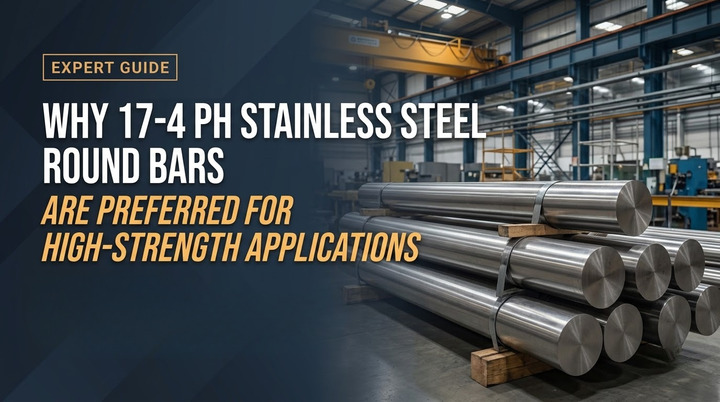
Why 17-4 PH Stainless Steel Round Bars Are Preferred for High-Strength Applications
Posted by Ashok Munot
Filed in Business 38 views
Understanding 17-4 PH Stainless Steel Round Bars
Engineers and procurement teams select materials based on strict mechanical requirements. The UNS S17400 designation identifies a specific precipitation hardening grade. This material bridges the gap between standard austenitic grades and martensitic options. Buyers looking for reliable raw materials usually contact 17 4 ph stainless steel suppliers for their inventory needs. The industrial sector utilizes 17 4ph Stainless Steel round bars because they provide a unique mix of toughness and structural integrity. Start with an initial solution annealed state. Then apply low temperature heat treatments. This process increases the mechanical properties significantly without distorting the metal.
Key Properties That Make 17-4 PH Suitable for High-Strength Applications
Evaluating the base properties helps engineers match the metal to specific project demands. These technical characteristics dictate how the material behaves under constant heavy stress.
Exceptional Mechanical Strength
This grade delivers extremely high tensile strength after the final aging process. The load bearing capability supports heavy structural designs. Component failure drops significantly when using this material in stressed environments. The structural reliability remains consistent across different production batches.
Corrosion Resistance in Industrial Environments
The surface resists attack from atmospheric moisture and common industrial liquids. Mild chemicals do not degrade the metal quickly. Prolonged industrial exposure conditions require this level of protection. Maintenance cycles extend much further compared to using standard alloy steel equivalents.
Heat Treatment Flexibility
The precipitation hardening process involves straightforward temperature adjustments. Fabricators modify the heating times to achieve specific mechanical outputs. This strength optimization capability gives machine shops total control over the final material hardness. The low temperature requirements prevent unwanted surface scaling.
Good Toughness and Fatigue Resistance
Repeated cyclic loading demands materials that absorb energy without sudden cracking. The internal grain structure handles constant vibration well. This delays metal fatigue and extends the overall component life cycle. Parts require far fewer replacements over the total operational timeline.
Dimensional Stability During Machining
The aging process happens at relatively low temperatures. Thermal distortion remains minimal during these final heat treatments. Precision manufacturing relies on this predictability. Operators hold tight tolerances easily when milling or turning 17 4ph round bars into finished machine components.
Industries That Commonly Use 17-4 PH Round Bars
Different sectors procure these bars to build their critical hardware. The metal withstands the distinct physical loads found in various heavy manufacturing and processing facilities.
Aerospace Components
Aircraft mechanisms require strong metals that withstand atmospheric moisture. Manufacturers cut landing gear parts and structural mounts from this alloy. The strength to weight ratio benefits flight hardware design significantly.
Oil and Gas Equipment
Drilling operations subject metal tools to immense pressure and corrosive fluids. Pump shafts and valve stems manufactured from this grade survive harsh underground conditions. Wellhead equipment relies on it heavily.
Marine Applications
Saltwater environments destroy standard steel quickly. Boat drive shafts and propeller fittings need the specific corrosion resistance this grade provides. Naval vessels use these bars for heavy exterior deck hardware.
Chemical Processing Equipment
Factories handling reactive fluids need durable piping components. Mixing shafts and storage tank fasteners utilize this metal. The alloy resists degradation from prolonged daily exposure to mild industrial chemical compounds.
Industrial Machinery Components
Heavy production machines operate under constant physical strain. Facilities build highly stressed gears and custom robotic arms using this material. Plant operators experience fewer sudden mechanical breakdowns during daily production.
Common High-Strength Applications for 17-4 PH Round Bars
Machine shops transform raw stock into specific functional items. The mechanical properties align perfectly with the engineering demands of several common heavy duty industrial parts.
-
Drive shafts transmit high rotational torque without twisting or bending under heavy motor loads.
-
Pump components push abrasive industrial fluids continuously without suffering from rapid metal erosion.
-
Valve parts regulate high pressure liquid flow and maintain their physical dimensions securely.
-
Heavy duty fasteners hold large industrial assemblies together under constant, severe physical tension.
-
Fluid fittings connect complex piping systems while preventing leaks in pressurized industrial setups.
-
Load bearing structural components support massive physical weights in commercial building framework structures.
-
Precision machined parts require tight physical tolerances that remain stable after final heat treatments.
-
Critical aerospace hardware requires absolute structural integrity to ensure passenger safety during turbulent flights.
Factors to Consider Before Selecting 17-4 PH Stainless Steel Round Bars
Procurement departments evaluate multiple technical variables before issuing purchase orders. Reviewing these specific criteria prevents costly material failures during the final manufacturing and assembly stages.
-
Engineers must calculate the exact required mechanical properties to support the expected physical loads.
-
Buyers need to verify the specific diameter and size requirements for their turning machines.
-
Facilities must decide on the initial heat treatment condition before starting the machining process.
-
The local corrosion environment dictates whether this specific alloy will survive the chemical exposure.
-
Production managers review the daily machining requirements to allocate the correct cutting tool types.
-
Quality control teams demand exact industry standards and certifications for full legal material traceability.
Why Material Sourcing Quality Matters
Purchasing raw stock requires strict attention to metal quality. A reliable 17 4 ph stainless steel round bar must exhibit perfect dimensional accuracy to fit into automated lathes. Machine shops rely on full material traceability to verify the origin of the steel. Proper testing standards ensure the metal matches the required technical specifications. Clear certification availability protects buyers from receiving counterfeit alloys. The consistency of material properties across different deliveries keeps manufacturing lines running smoothly. Leoscor Alloys supplies these industrial materials to meet exact engineering demands.
Conclusion
Industrial projects succeed when engineers understand the core performance benefits of their materials. Proper material selection logic prevents early mechanical failures in the field. This specific alloy provides long term reliability under extreme physical stress. Choosing the right specification for application needs ensures the final machined components operate exactly as intended.