AMS 5878 Plate in Thermal Processing Equipment: Where It Fits
Posted by Mahesh Ranka
Filed in Business 37 views
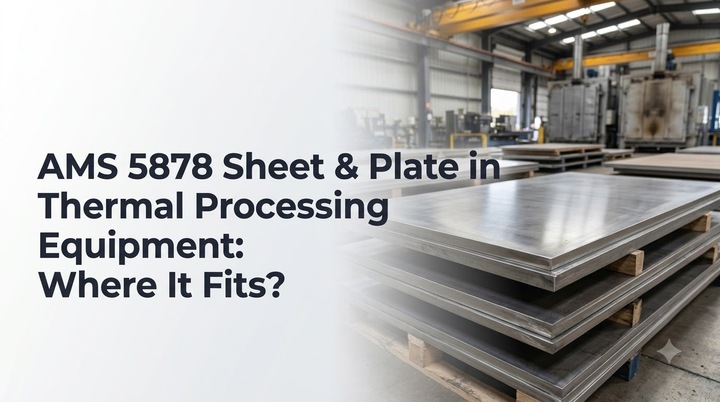
Thermal processing equipment operates under harsh mechanical conditions. Components inside industrial furnaces face extremely high temperatures on a continuous basis. They also experience oxidation and severe thermal cycling from repeated heating and cooling phases. Mechanical stress is another major factor since parts must support heavy loads while hot. Haynes 230 is a nickel based alloy formulated specifically for these demanding environments. It handles high heat without losing structural integrity.
Why Haynes 230 Is Used in Thermal Processing
Engineers specify this material for thermal processing because of its high temperature strength. Tungsten and molybdenum added to the nickel chromium matrix provide solid solution strengthening. This maintains load bearing capacity at temperatures up to 2100 degrees Fahrenheit. Components hold their shape under mechanical stress.
The chromium content generates a protective oxide layer on the metal surface. This layer remains intact during operation. It stops further oxidation from consuming the base metal.
In certain furnace atmospheres, nitrogen diffuses into metals and causes embrittlement. The high nickel base resists this nitrogen absorption.
Creep is the slow deformation of metal under constant stress at high heat. The alloy resists this deformation. It also maintains thermal stability and avoids embrittlement after prolonged exposure to intermediate temperatures.
Some alloys experience grain growth at high heat. This reduces mechanical strength. Minor additions of carbon and lanthanum in the alloy control this grain coarsening.
Fabricability and weldability are required for building industrial equipment. Despite its strength, the alloy can be formed using standard methods. It welds readily using conventional gas tungsten arc welding or gas metal arc welding. Post weld heat treatment is generally not required to maintain its high temperature properties.
Where Haynes 230 Fits in Thermal Processing Equipment
Here are the practical applications in thermal processing environments.
-
Furnace retorts require specific materials that block heavy oxidation during prolonged heat exposure to protect the inner atmosphere from degradation.
-
Heat treatment baskets and heavy fixtures must retain solid mechanical shape under heavy loads during severe thermal cycling conditions repeatedly.
-
Burner components sit directly in the extreme combustion zone and need materials that withstand direct flame impingement and rapid oxidation.
-
Dampers regulate hot gas flow inside exhaust stacks and require high temperature structural stability to prevent warping under operational pressure.
-
Thermocouple protection tubes shield temperature sensors from corrosive furnace gases and must resist high temperature degradation over very long periods.
-
Recuperator components recover industrial waste heat from exhaust gases and need specific alloys that resist thermal fatigue and environmental attack.
-
Ducts transport corrosive exhaust gases at high temperatures and require stiff materials that prevent sagging across very long structural spans.
Role of AMS 5878 Sheet and Plate
The aerospace material specification AMS 5878 defines the exact manufacturing requirements for this alloy in specific forms. The specification covers Haynes 230 Sheet, AMS 5878 Plate, and strip products. It establishes strict limits on chemical composition. It also dictates the mechanical properties and the required solution heat treated condition before the metal leaves the mill.
Specification controlled flat products are relevant for fabricated thermal processing components. Manufacturers use sheet and plate to build large fabrications like retorts and ducting. When a fabricator purchases AMS 5878 Sheet from Parag Metals, they receive a material with documented baseline properties. This takes the guesswork out of forming and welding operations. It guarantees the metal will respond predictably during fabrication.
Not every component in a thermal processing facility requires this specific aerospace certification. Some non critical furnace furniture can use standard commercial grade material. However, when building highly stressed components, engineers rely on the AMS standard to ensure material uniformity. Haynes 230 Plate ordered to this specification provides a reliable starting point for heavy duty fixtures.
Factors to Consider When Selecting AMS 5878 Plate
Selecting AMS 5878 Plate requires evaluating the specific furnace conditions. Engineers must verify the maximum continuous operating temperature and the peak excursion temperatures.
Thermal cycling frequency impacts the material choice. Furnaces that cool down daily place different stresses on metal compared to continuous process furnaces. The metal expands and contracts. This causes thermal fatigue. The alloy resists thermal fatigue better than standard stainless steels.
The gas mixture inside the heating chamber reacts with the metal surface. The nickel and chromium levels handle these oxidizing environments well.
Heavy fixtures need thicker plates to carry mechanical loads. Burner liners use thinner material to reduce weight and cost.
Fabrication and forming requirements determine the manufacturing process. Heavy plates require large press brakes for bending. The shop must have the heavy equipment capacity to form high strength nickel alloys without cracking the material.
Welding procedures must match the material grade. Fabricators use matching filler metals. The weld joints must withstand the same temperatures as the base plate.
The required material condition is almost always solution heat treated. The AMS specification ensures the metal arrives in this specific metallurgical state. This maximizes ductility for forming heavy plates. The fabricator does not need to perform initial heat treatments.
Industrial plants keep records of component materials. Mill test reports provide the chemical analysis and mechanical testing data for the specific heat lot.
Haynes 230 vs Conventional Furnace Materials
Thermal processing operations often start with common stainless steels. As temperatures increase, the material selection must change. Engineers upgrade to nickel alloys when standard materials fail from oxidation, warping, or creep. The table below compares the performance categories of standard furnace alloys against the upgraded nickel alloy options. The selection shifts based on the severity of the operating environment.
|
Material Property |
Conventional Stainless Steels (e.g. 304, 316) |
Standard High Temp Alloys (e.g. 310, 330) |
Advanced Nickel Alloys (Haynes 230) |
|
High Temperature Strength |
Loses structural integrity rapidly above 1500F. |
Moderate strength for standard loads. |
Maintains high load bearing capacity up to 2100F. |
|
Oxidation Resistance |
Scales heavily in continuous high heat. |
Good resistance up to 1900F. |
Generates stable protective oxide layer at extreme heat. |
|
Thermal Stability |
Prone to embrittlement over time. |
Better stability but can suffer thermal fatigue. |
Resists metallurgical degradation during long term exposure. |
|
Fabrication |
Easy to form and weld. |
Requires careful welding procedures. |
Weldable but requires specialized high strength forming equipment. |
|
Typical Thermal Processing Applications |
Low temperature ovens, light duty baskets. |
Standard furnace muffles, medium duty fixtures. |
Heavy duty retorts, severe environment burner components. |
Conclusion
In industrial plants, Haynes 230 Thermal Processing Equipment components handle conditions that destroy standard metals. Equipment relies on the high temperature strength and environmental resistance of the nickel chromium matrix. AMS 5878 Plate and Haynes 230 Sheet provide standard, predictable materials for fabricating these complex parts. Engineers must base their final material selection on the actual temperatures, the specific gas atmosphere, the mechanical loading, and the fabrication limits of the manufacturing facility.