How to Choose the Right Inconel 625 Bolt for Industrial Projects
Posted by Vikram Sharma
Filed in Business 42 views
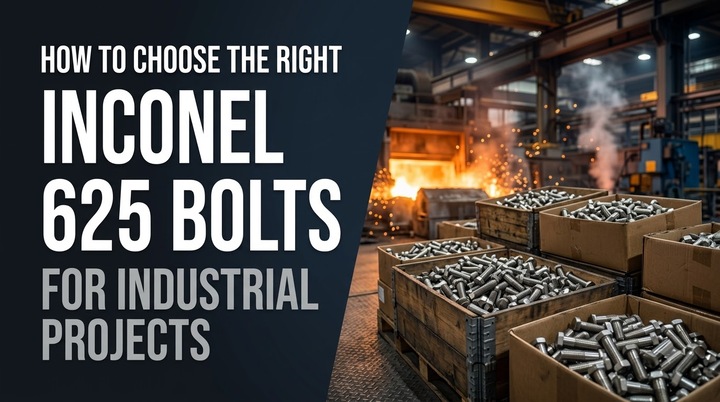
Industrial fasteners operating in heavy, aggressive environments must withstand severe chemical corrosion and extreme oxidation levels without compromising basic joint integrity. High operating temperatures will rapidly weaken standard carbon or structural steel materials. Choosing the right Inconel 625 Bolts prevents sudden mechanical failure in these extreme industrial applications. This high-performance nickel alloy fastening solution delivers exceptional strength under immense stress. Selecting the precise material specification is critical to ensure uninterrupted long-term operational reliability across heavy engineering sectors.
Why Material Selection Matters for Industrial Fasteners
Specifying the correct alloy determines the baseline safety of any processing facility. Active chemical corrosion constantly attacks bolted joints over time and degrades the physical connection. Fasteners must maintain full integrity during extreme high-temperature performance cycles without creeping or fracturing. Costly equipment downtime often traces back to poor initial material choices. Alloy 625 bolts provide the necessary mechanical reliability required for these demanding operations. Choosing the exact grade significantly reduces long-term maintenance costs and unexpected replacement frequency. Project engineers must evaluate all service conditions thoroughly to execute the bolt selection process accurately.
How to Choose the Right Inconel 625 Bolt for Industrial Projects
Procurement teams and engineers must follow a rigid evaluation process before approving any fastener purchase. The following steps will help verify the correct specifications.
-
Buyers must first confirm the exact alloy grade and UNS N06625 bolts designation to ensure the material resists localized chemical corrosion over decades.
-
Engineers should rigorously verify the applicable ASTM or ASME specifications to guarantee the fastener meets strict industrial pressure vessel code requirements perfectly.
-
Plant managers must match the exact bolt dimensions with the approved engineering project drawing to avoid critical assembly errors during final installation.
-
Procurement teams need to select the correct mechanical configuration, like Inconel 625 hex bolts or heavy stud bolts to secure the specific joint properly.
-
Process users must evaluate the maximum operating temperature requirements because this metric strictly dictates the long-term creep resistance of the final structural connection.
-
Project consultants should carefully consider the specific corrosive service environment to prevent rapid material degradation resulting from extremely harsh industrial chemical exposure.
-
Industrial buyers have to review the mechanical property requirements to verify the specialized fastener can withstand the massive physical shear and tensile loads.
-
Mechanical installers must confirm the exact thread type and dimensional standards to ensure completely seamless compatibility with the existing heavy machinery components.
-
Site inspectors should verify the detailed inspection reports and material traceability records to eliminate the serious risk of installing counterfeit metal products.
-
Procurement departments must request Mill Test Certificates and EN 10204 3.1 documentation to legally validate the exact chemical composition of the supplied batch.
-
Engineers need to check specific coating or surface finish requirements if the mechanical application demands extra physical protection against severe friction and galling.
-
Buyers should evaluate the supplier's inventory and production capability to secure highly realistic delivery schedules for urgent planned maintenance plant turnarounds.
Comparison Table: Inconel 625 Bolts vs Conventional Stainless Steel Bolts
Understanding the distinct technical differences between metals helps buyers justify the initial project cost. This table compares essential performance parameters between standard options and premium ASTM B446 Inconel 625 fasteners.
|
Parameter |
Inconel 625 Bolts |
Conventional Stainless Steel Bolts |
|
Corrosion Resistance |
Excellent |
Moderate to High |
|
High Temperature Performance |
Excellent |
Moderate |
|
Oxidation Resistance |
Excellent |
Good |
|
Chloride Resistance |
Excellent |
Moderate |
|
Mechanical Strength |
High |
Moderate |
|
Service Life |
Longer in aggressive environments |
Depends on operating conditions |
|
Typical Industries |
Offshore, Chemical Processing, Marine, Power Generation |
General Industrial Applications |
Common Mistakes Buyers Should Avoid
Purchasing standard commercial materials for severe industrial applications leads to catastrophic failure. Buyers frequently make critical errors that quickly compromise the entire structural heavy assembly.
-
Selecting heavy industrial fasteners based only on the lowest market price usually results in premature joint failure and massive unbudgeted equipment replacement costs.
-
Ignoring the strict engineering project specifications directly leads to serious non-compliance issues and severe physical safety risks for the active plant operators.
-
Choosing highly incompatible metals causes rapid galvanic corrosion and completely destroys the baseline mechanical integrity of the entire industrial processing piping system.
-
Overlooking the mandatory inspection documentation easily allows low-grade substitute metals to enter the critical production facility completely unnoticed by the quality team.
-
Failing to verify the official material testing certifications severely jeopardizes the original structural warranty of the newly engineered heavy mechanical equipment.
-
Ordering incorrect thread dimensions completely halts the mechanical installation process and strictly forces expensive project delays across the entire active engineering site.
-
Ignoring the actual environmental chemical exposure causes the Nickel alloy 625 bolts to degrade significantly faster than the calculated safe engineering lifespan.
Questions to Ask Before Purchasing Inconel 625 Bolts
Procurement teams must carefully vet their industrial suppliers before finalizing any massive bulk orders. Asking specific technical questions directly prevents costly material rejection upon delivery. Use these highly practical queries to verify the manufacturing capabilities of the vendor and confirm the exact quality of the fastening components.
-
Which ASTM or ASME standards does the bolt comply with?
-
Is complete material traceability available?
-
Are Mill Test Certificates supplied?
-
Which bolt sizes and thread standards are available?
-
Can custom dimensions be manufactured?
-
What inspections are carried out before dispatch?
-
What are the standard production and delivery lead times?
Conclusion
Choosing the correct Inconel 625 bolts involves evaluating alloy specifications and mechanical properties instead of focusing solely on initial cost. Buyers must review corrosion resistance and verify dimensional accuracy through proper supplier documentation. A well-informed selection improves reliability and supports long-term operational performance. Engineers can explore detailed specifications and available sizes directly through the linked resource above.