Why Stainless Steel Flanges Are Used in Industrial Piping Systems
Posted by Raj Bhosale
Filed in Business 29 views
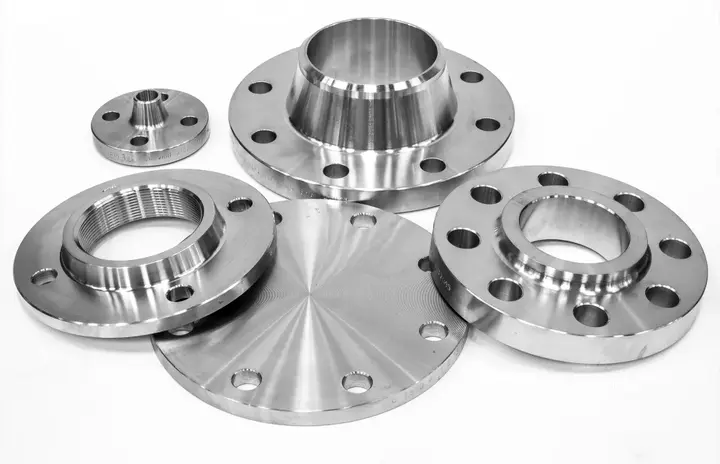
A piping system that cannot be opened cannot be maintained. Flanges solve that by joining pipes, valves, pumps and vessels through bolted joints a crew can break and remake on site. Stainless Steel Flanges hold their sealing faces in wet, chlorinated and chemically aggressive service, where carbon steel rusts at the gasket seat within seasons.
What Are Stainless Steel Flanges?
SS Flanges are forged collars fixed to a pipe end or nozzle, then bolted against a matching flange with a gasket between the sealing faces. Fitters unbolt the joint instead of cutting it, so a line opens for inspection in under an hour. Stainless Steel Flange Fittings run NPS ½ to 24 under ASME B16.5 and NPS 26 to 60 under ASME B16.47, in classes 150 to 2500, with raised face, flat face and ring joint facings. ASTM A182 Stainless Steel Flanges cover forged grades F304, F316 and F51.
Why Are Stainless Steel Flanges Used in Industrial Piping Systems?
Six properties keep Industrial Stainless Steel Flanges in specification across process plants.
-
Corrosion resistance: Chromium above 10.5% builds a passive oxide film that reforms after damage. Resistance shifts with grade: 304 suits treated water, duplex 2205 survives seawater.
-
Strength and durability: ASME B16.5 rates a Class 300 F304 flange at 740 psi to 38°C, held through thermal cycling.
-
Hygienic properties: Polished 316L faces at Ra 0.8 µm leave no crevice for bacteria, so dairy and pharmaceutical lines specify them.
-
Temperature performance: Austenitic grades stay ductile from -196°C to 538°C under ASME B16.5, subject to the design code.
-
Maintenance accessibility: Crews unbolt the joint, swap a gasket or lift a valve out, then retorque the studs.
-
Long-term value: Matching grade to fluid cuts corrosion leaks and the stoppages that follow over a 20-year life.
Common Types of Stainless Steel Flanges
Six types cover most piping layouts.
-
Weld Neck Flanges: A tapered hub butt welds to the pipe, carrying stress from the joint on high pressure lines.
-
Slip-On Flanges: The flange slides over the pipe end and takes two fillet welds where the code permits.
-
Blind Flanges: Solid discs bolt across pipe ends, vessel openings and spare nozzles, keeping future access.
-
Socket Weld Flanges: Pipe drops into a machined recess and takes one external fillet weld on small bore lines.
-
Threaded Flanges: Internal threads engage matching pipe threads, so no weld touches the joint.
-
Lap Joint Flanges: The flange rotates over a stub end, letting fitters align bolt holes fast.
Common Stainless Steel Grades for Flanges
Three grade families cover most flange demand.
-
SS 304: 18% chromium with 8% nickel resists treated water, steam and food service. Chlorides set its limit.
-
SS 316: 2% to 3% molybdenum lifts pitting resistance above 304 in brine and process acids.
-
Duplex Stainless Steel: Duplex 2205 doubles the yield strength of 316, near 450 MPa against 205 MPa.
Grade choice follows the fluid, chloride concentration, temperature, pressure class and design code.
Industrial Applications of Stainless Steel Flanges
Stainless flanges appear wherever corrosion, cleanliness or access drives specification.
-
Oil and gas: Wellhead manifolds, separator piping and pump skids bolt up in 316 and duplex.
-
Chemical and petrochemical plants: Acid lines, reactor nozzles and exchanger covers need flanges matched to the chemistry.
-
Food and beverage processing: CIP loops, filler lines and vessels use polished 316L flanges that wash down cleanly.
-
Pharmaceutical manufacturing: WFI loops and process skids demand documented traceability and cleanable surfaces.
-
Water treatment and marine environments: Desalination racks, intake headers and shipboard systems move to 316L or super duplex.
-
Power generation and general manufacturing: Condensate lines, pump connections and valve stations run on standard class flanges.
How to Choose the Right Stainless Steel Flange
Start with the fluid. Confirm grade compatibility against the medium, chloride load and temperature, because corrosion failure ignores the pressure rating. Check pipe size, flange type and pressure class, then read the pressure-temperature table for that material group. Pair facing with gasket: raised face with spiral wound, ring joint with a metal ring. Where pitting, crevice attack or stress corrosion cracking threatens the joint, move to 316L or duplex. Verify dimensions against ASME B16.5 or B16.47 and review mill test certificates before despatch.
Conclusion
Corrosion resistance, bolted strength and openable joints explain why plants specify stainless across flanged connections. Operating environment, chloride exposure, pressure-temperature duty and design code decide which flange belongs where. Rajveer Stainless and Alloys supplies Stainless Steel Flanges in 304, 316, 321 and duplex grades with mill test certification. Confirm your line size, class and fluid before you order.